The Problem
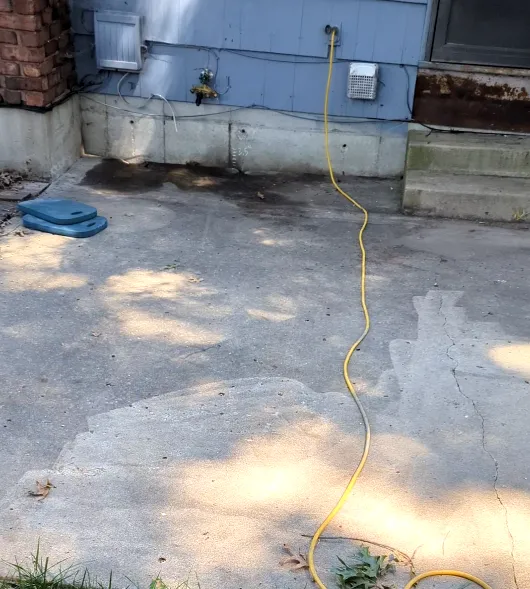
By the time the current homeowner moved in, this patio had already been severely settled for years.
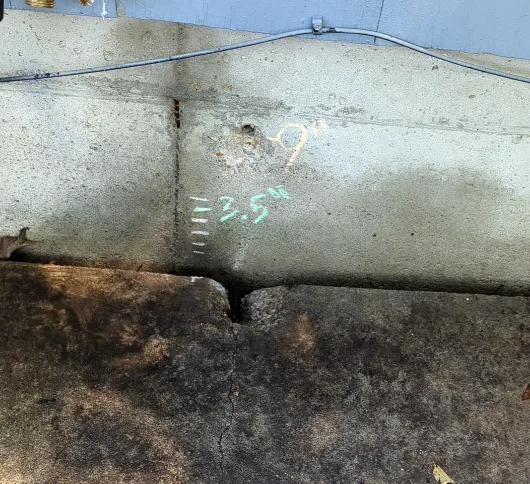
The concrete had dropped roughly 9 inches from its original position and, more importantly, the patio was tilted toward the house. Rainwater was being directed toward the foundation instead of away from it.
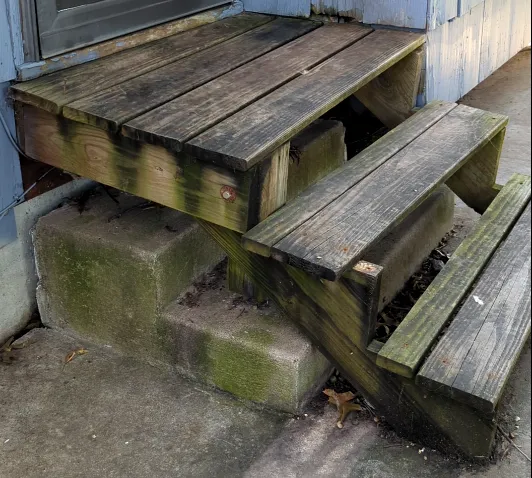
A previous homeowner had built around the settled concrete rather than correcting or replacing it. Wooden stairs had been added to compensate for the drop, and a deck had been built to match the settled patio elevation.
The goal was not to simply raise the entire patio back to its original height. The important problem was the drainage slope toward the house.
The Work
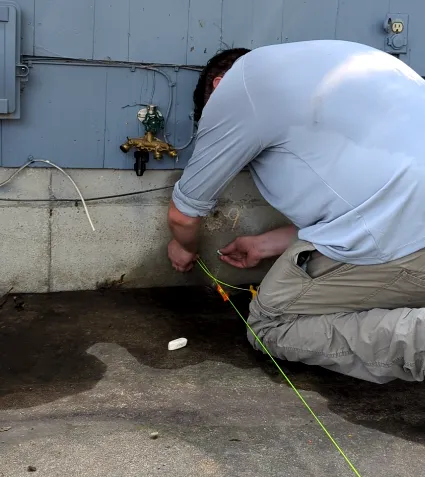
We first measured the patio to determine how much the house-side edge needed to rise to create the correct drainage direction.
A reference line was established on the wall to identify the target elevation. The house-side edge needed approximately 3.5 inches of lift to reach that level, with the goal of bringing it slightly beyond the reference so water would run away from the house.
The existing wooden stairs and deck sections that interfered with the lift were removed before the concrete work began.
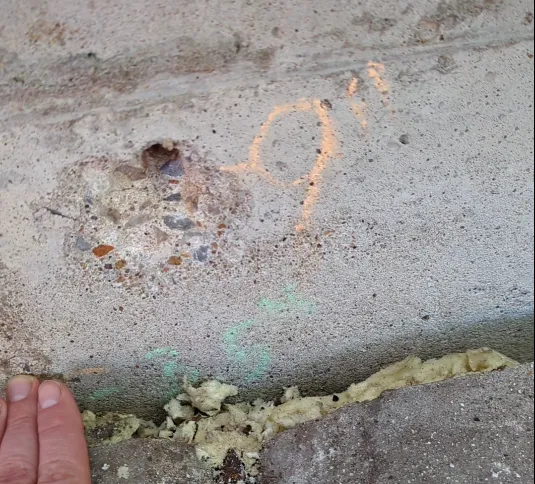
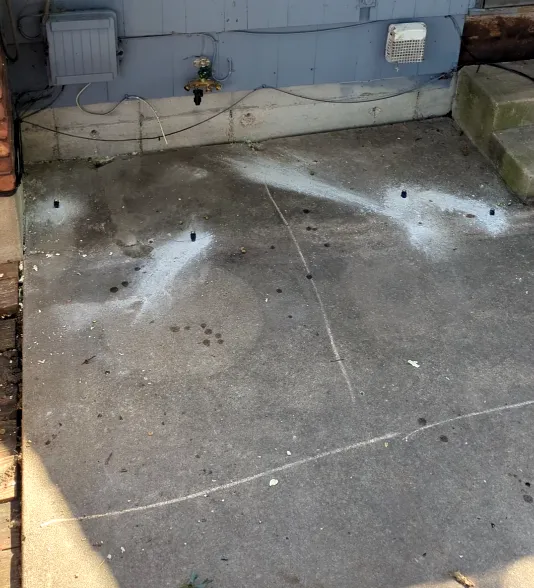
Near the house, rebar was cut where necessary to allow the slab to be corrected. Crack lines were also marked before drilling so injection points could be placed strategically rather than drilling directly through the existing cracks.
The patio was then lifted from below using targeted polyurethane foam injection while the elevation was monitored throughout the process.
The Result
The patio was raised enough to correct the slope toward the house without trying to force the entire slab back to its original elevation.
The result addressed the problem that mattered most: getting the concrete to drain away from the foundation while preserving the existing patio rather than replacing it.
The project is a good example of why concrete leveling is not always about simply lifting a slab as high as possible. The right correction depends on what the concrete is doing, what surrounds it, and what needs to change to make the space work properly.